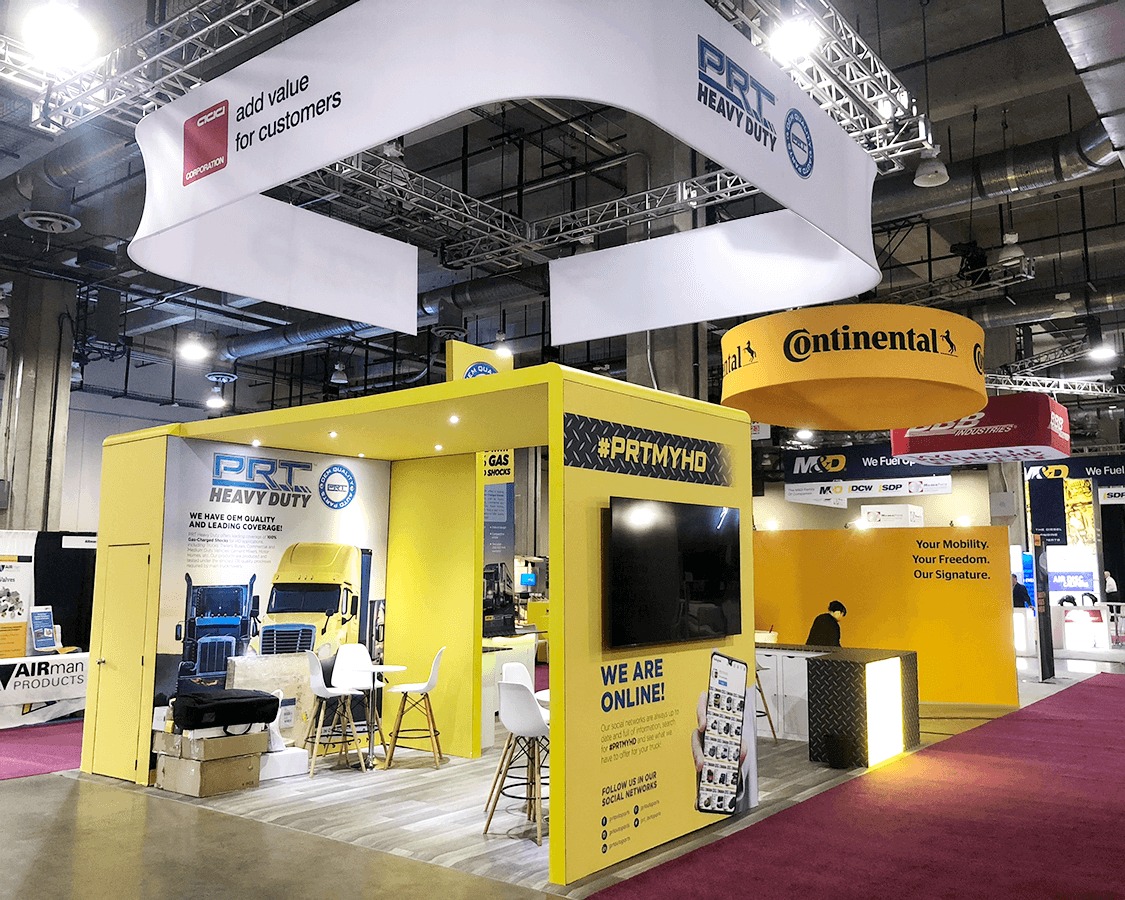
What a rental package actually includes
Most rental packages are built from an aluminum extrusion frame with fabric or laminate infill panels, plus a furniture and AV mount package priced as a separate line. A rental house that keeps inventory in a Las Vegas-area warehouse can turn a booth around faster than one shipped in from another market, since the pieces never leave the valley between shows. That local stock also cuts the drayage weight an exhibitor pays for, because there is no empty shipping crate riding a truck in from out of state before the show even opens.
During the heaviest weeks on the Convention Center calendar, when a show like CES fills the Central, North, and West Halls at once, local rental stock books early and out-of-town vendors struggle to get freight into the valley in time. A rental house working from a Vegas-based warehouse can often still accommodate a late order that a shop shipping from another state cannot.
The union labor lines that still apply
Teamsters Local 631 controls drayage and material handling on the show floor, which means moving a rental crate from the marshaling yard to the booth space, and setting it down, falls under their jurisdiction regardless of who owns the structure. If the rental design includes a hanging sign or a truss element above the booth, IATSE governs that rigging point, and it needs its own crew call separate from the floor-level install crew.
Exhibitor labor rules let a company's own employees do light finishing work inside their own booth space without hiring outside labor, but that exemption stops at ladder work above a set height and at anything that touches a rigging point. Past that line, a supervised union crew has to take over, and the show's labor desk enforces that boundary at the booth as well as at the loading dock.
When rental beats owning inventory
Rental makes the most sense for a one-off appearance, a first test of a new footprint size, or a program that changes its graphics often enough that an owned custom structure would need rebuilding almost every cycle anyway. It also removes the warehouse cost of storing an owned exhibit between shows, which matters for a company that only appears at one or two Las Vegas events a year rather than running a full circuit.
A company weighing rental against ownership should also account for graphics production timelines. A rental frame with new panel inserts can usually turn around on a shorter production schedule than a custom laminate build, which matters when a launch date or a keynote slot gets locked in late.
Coordinating move-in with the general contractor
The rental vendor still has to hit the target move-in date printed in the show's exhibitor kit. Missing that window usually means paying an overtime labor rate instead of straight time for the same material handling work, and during a heavy-show week that overtime rate can be a meaningful share of the total drayage bill.
The Convention Center's Loop tunnel moves attendees between the Central, North, and West Halls, but it carries no freight at all, so every rental crate still travels the marshaling yard and dock route like any other shipment. Dock schedules during a heavy-show week can compress load-in to a narrow window, which is one more reason a rental vendor with local Vegas inventory has an edge over one trucking gear in from another state.