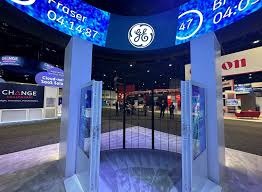
Reading the venue before the concept
The creative concept for an activation has to bend around the venue, not the other way around. A plaza space at Caesars Forum has different power drops, load limits, and sightline rules than a footprint carved out of a larger convention hall at the Convention Center, and a freestanding Strip-adjacent site has almost none of the built-in infrastructure either venue type provides. Confirming power, rigging points, and dock access before the design is locked saves a rebuild later.
Outdoor or semi-outdoor activation sites also bring weather and wind-load considerations that an indoor hall never has to account for, which affects everything from signage material to how a structure gets anchored.
Exclusive AV and rigging providers on Strip property
Most Strip resorts hold an exclusive or preferred AV and rigging agreement, which means an outside production company typically has to buy out that house provider or work as a sub under them rather than bringing in its own crew directly. That agreement covers rigging points, house sound, and often house lighting, and it applies whether the activation is tied to a larger convention or stands entirely on its own.
Working inside the Convention Center itself is different again, since the show's official general contractor and its Teamsters and IATSE crews handle the floor there instead of a hotel's in-house team. An activation that spans both a Convention Center footprint and an off-property Strip location effectively answers to two separate labor structures on the same program.
Staffing an experience versus a booth
A booth staffer works a fixed spot and waits for traffic to arrive. Activation staffing usually splits between a small core team running the experience itself and a larger rotating group handling crowd flow, line management, and guest interaction, since an activation is built to move people through a sequence rather than hold them at a counter.
That staffing model also changes the labor call. An activation that runs longer hours than a standard show floor, or that spans an evening event separate from daytime show hours, needs its crew scheduling planned around two different clocks rather than one straight show-floor shift.
Permits for anything outside four walls
A temporary structure, tent, or stage built outside a venue's four walls, even on hotel-owned Strip frontage, usually needs a permit from Clark County or the City of Las Vegas depending on the exact address, and that permit process runs on its own timeline separate from the show's exhibitor deadlines. Waiting until the final weeks to start that paperwork is one of the more common ways an outdoor activation gets delayed.
Fire marshal review for an outdoor activation also tends to be stricter than for an indoor booth, since occupancy limits, emergency egress, and structural anchoring all get evaluated against public sidewalk and roadway proximity rather than a hall's fixed aisle grid.
Measuring an activation after the fact
Unlike a booth, which can track lead scans against a fixed dwell time, an activation usually measures success through a mix of participation counts, social sharing, and dwell time inside the experience itself. Building that measurement plan into the activation's design, rather than adding it once the build is already finished, determines whether the client walks away with usable data.
Photo and video content generated by an activation often becomes as valuable as the on-site attendance numbers, which means camera positioning and lighting for content capture deserve the same planning attention as the guest-facing experience itself.
Budget conversations for an activation also tend to weigh production value per guest rather than cost per square foot the way a booth budget does, since a smaller, more intensely produced experience can outperform a larger, thinner one on the metrics a brand actually cares about after the program ends.